
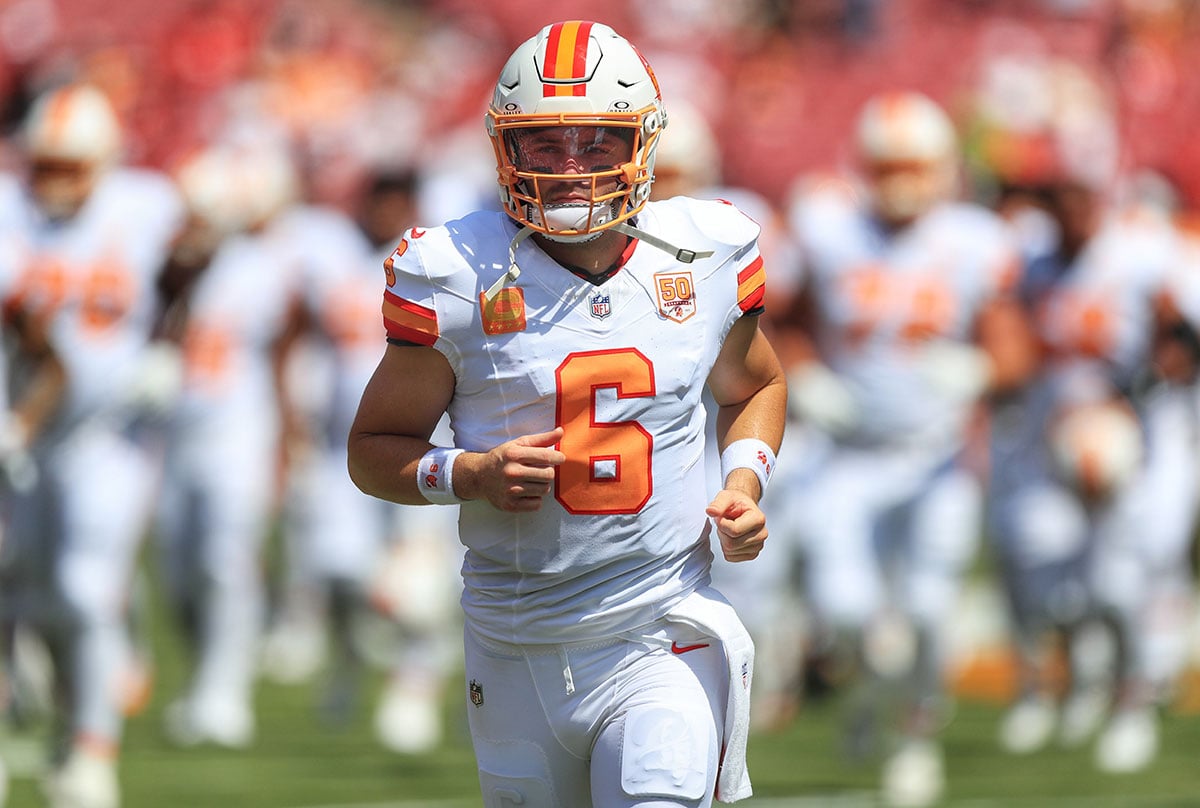
In a weekly column every Thursday on PewterReport.com, two Pewter Reporters will debate a topic with opposing viewpoints. Which Pewter Reporter wins the debate? You get to decide in the comments section below.
This week’s topic: What Should Bucs’ Identity Be In 2026?
Point: Bucs’ Offense Must Play To Baker Mayfield’s Strengths, Defense Needs Athletic Linebackers
By Adam Slivon
Josh Queipo and I took time before this week’s Point-Counterpoint to go over the nuances of what changes the Bucs need to make this offseason to improve both sides of the ball. While we agreed in what needs to change, each of us took a different approach to carving that plan out. Starting with the offensive side, all of the pieces are in place around quarterback Baker Mayfield to have success.
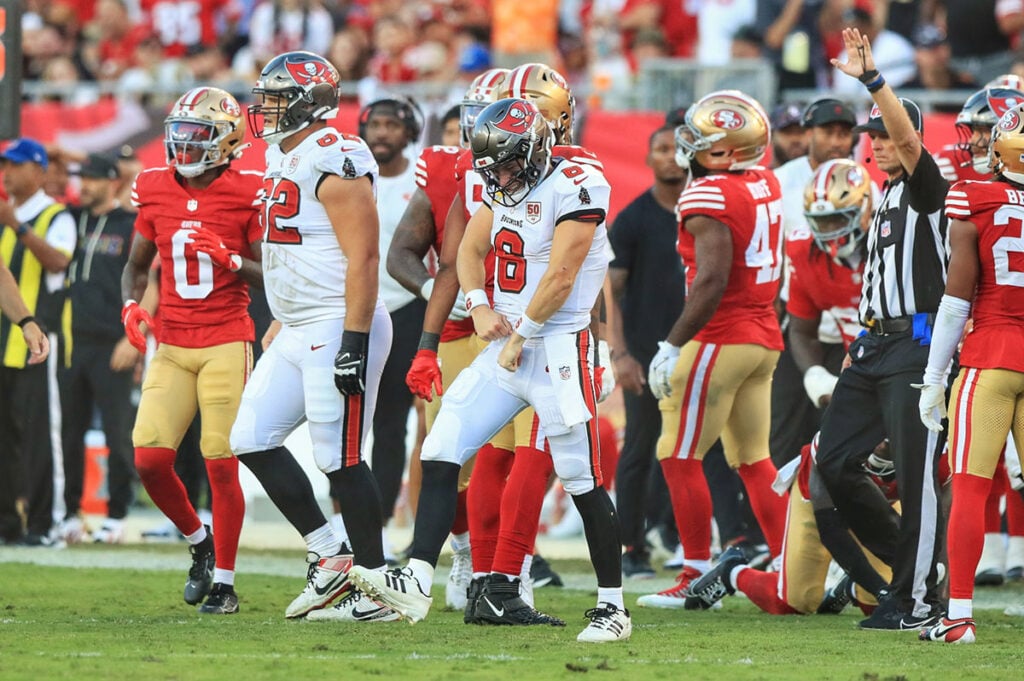
Bucs QB Baker Mayfield – Photo by: Cliff Welch/PR
With that, it is time to rely on the franchise signal-caller more than ever entering 2026. Mayfield found the most success of his NFL career in 2024, operating within offensive coordinator Liam Coen’s scheme. During that year, Coen drew up offensive gameplans catering to his strengths while limiting his weaknesses. In harnessing the gunslinger, Mayfield got into rhythms early in games by utilizing the quick game passing attack.
Throwing short passes and connecting on a high percentage of them in turn opened up the rest of the offense, allowing for opportunities later in games for him to sling it downfield and have success. As a result, Mayfield completed a career-high and franchise-best 71.4% of his passes for 4,500 yards with 41 touchdowns and 16 interceptions and his second straight Pro Bowl appearance in 2024.
Do you remember all the long touchdowns Jalen McMillan had as a rookie, especially late in the year? The torrid start Chris Godwin Jr. had to begin that season? Both of those talented wide receivers remain, likely along with Mike Evans for a 13th season and what should be a more polished Emeka Egbuka entering year two.
With ample wideouts, running more plays out of shotgun would give him chances to air it out, and the run game would be able to function as a more suitable complement. In today’s NFL, passing remains king. Offensive balance is desired but having Mayfield and as deep of a receiving core as you will find, playing to his strengths is necessary.
Defensively, the unit has regressed in recent years and really ever since Tampa Bay’s Super Bowl win in 2020. It is not a coincidence the defense found its most success running head coach Todd Bowles’ blitz-heavy approach with two athletic inside linebackers up the middle. With Devin White playing at a high level and Lavonte David five years younger, it opened the door to run the desired scheme of blitzing White more often and having David as a plus-coverage linebacker.
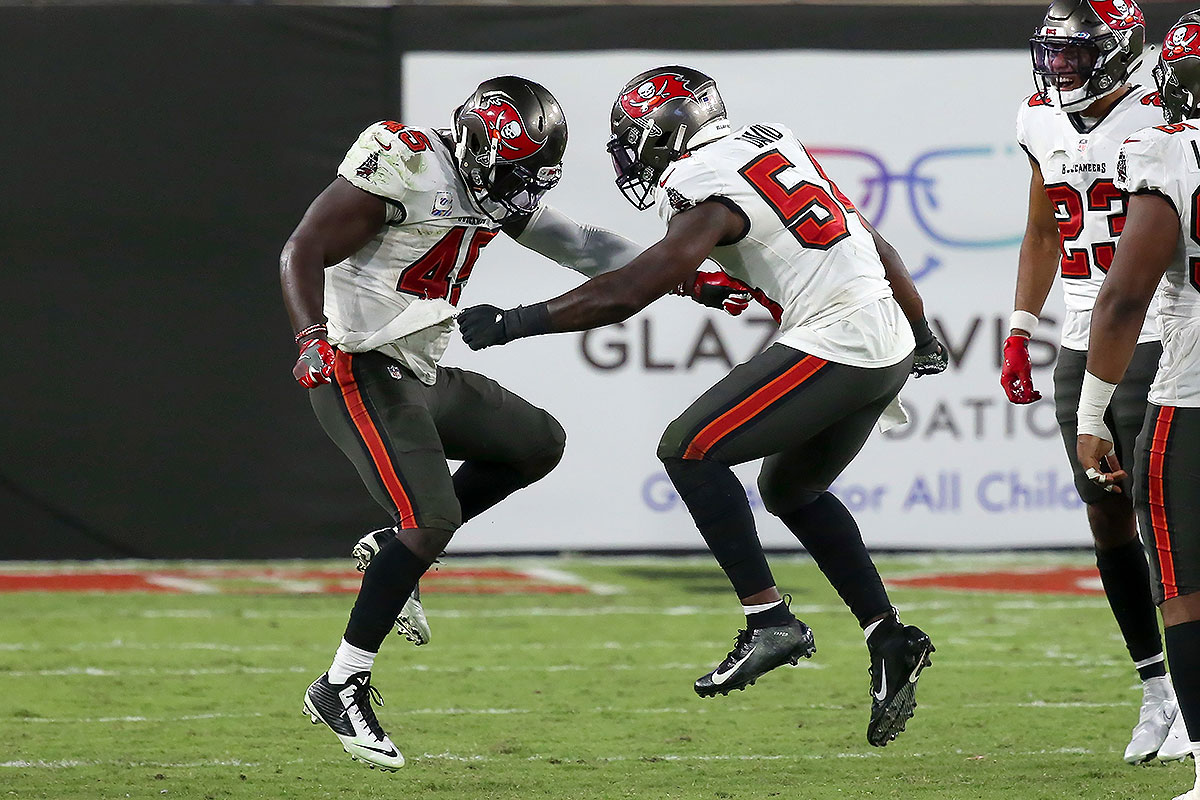
Former Bucs ILB Devin White and ILB Lavonte David – Photo by: Cliff Welch/PR
Not having that in recent years makes it obvious why the middle of the field has become a black hole. Opposing quarterbacks have been able to take advantage of the defense by getting the ball out quicker against the Bucs, negating the advantage blitzing had. Running backs have had big days getting to the second level and not having someone springy enough to bring them down.
Allowing David to walk into the sunset and revamping the rest of the room with athletic linebackers would help the rest of the front seven, regardless of who is calling plays. The pass rush would be aided by the extra help and have a split second longer to get pressure. The secondary would not have to do all the dirty work and be as exposed when playing zone. The identity of this defense should be getting an imposing linebacker.
Need proof?
Look at the long lineage of elite play at the position over the past three decades, whether that is Hardy Nickerson, Derrick Brooks, and Lavonte David. The results followed.
Counterpoint: Under Center Play-Action and A Four-Down Defense That Will Bring Bucs Up To Speed With NFL
By Josh Queipo
The Bucs’ first drive against the Dolphins last week went for seven points. They scored 10 on the following nine possessions combined. That drive started with a play-action pass from under center on first down that collected eight yards. The Bucs would run play-action three more times on first down on that drive, leading up to the touchdown that put the Bucs up early.
In a season where the offense has rarely clicked, the Bucs’ play-action game has been effective. Here are Baker Mayfield’s splits when passing from play-action vs. straight drop back.
Play-Action – 66-of-103, 825 yards, six touchdowns, one interception, 8.0 yds/attempt, 64.1% completion rate, +0.23 EPA/drop back
Drop Back – 261-of-418, 2,665 yards, 19 touchdowns, nine interceptions, 6.7 yds/attempt, 62.4% completion rate, -0.08 EPA/drop back
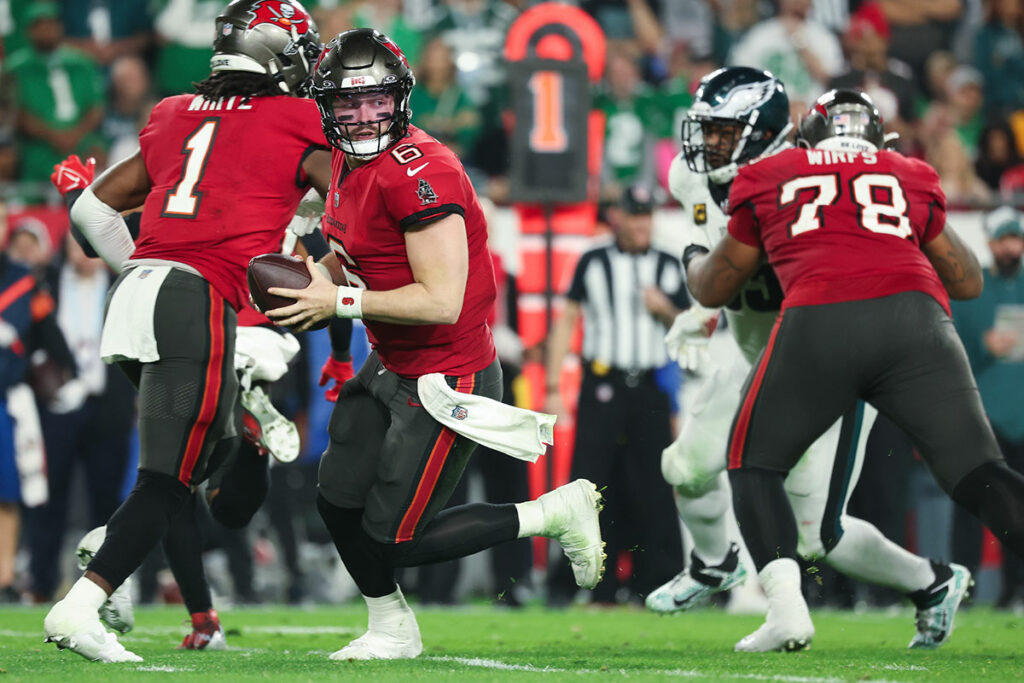
Bucs QB Baker Mayfield, RB Rachaad White and LT Tristan Wirfs – Photo by: USA Today
Only 20.9% of Mayfield’s drop backs this year have used play-action. That’s 24th among 26 qualifying quarterbacks, per Pro Football Focus. Offensive coordinator Josh Grizzard has been routinely criticized this year for the offense’s struggles. Some of that has been earned. Some of it hasn’t. One valid criticism of him has been the lack of play action he has incorporated into gameplans.
The Bucs are 6-2 when Grizzard Mayfield has used play-action at least 22.5% of the time. They’ve averaged 26.75 points per game. In the games they have used play-action below that threshold they are 1-7 while averaging 18.75 points per game. The myth that the run has to be established before play-action can be effective is just that, a myth. This helps get Mayfield into a rhythm early while actually setting up the run.
Six of the top 10 offenses in play action this year also rank in the top 10 in offense as measured by EPA/play. The other four include the Seahawks and Broncos, who rank 11th and 13th, respectively.
On the other side of the ball, it is time for the Bucs to embrace a four-down-and-go philosophy on defense. Take a look at the top 10 defenses this year. Only Minnesota and Denver rank in the top 10 in blitz rate. And Denver can win with its four-man pass rush. Their defensive coordinator, Vance Joseph, likes to send extra heat way more than the 32.7% rate he’s been at this year. Seven of those 10 teams rank 18th or lower in blitz rate.
The Bucs need to embrace this trend in the NFL. Passing attacks being what they are, now more than ever teams have to be able to commit more resources to coverage. That will require a big swing to find an edge rusher who can elevate the rest of the front seven. Yaya Diaby, Vita Vea and Calijah Kancey can all operate as starters in a strong front-four – provided they are buttressed by a premium edge rusher who acts as a force-multiplier.
Someone who can win one-on-0ne regularly and help the others get clean-up sacks. Because while they are all talented players, none are a force-multiplier who can be trusted to stay on the field.
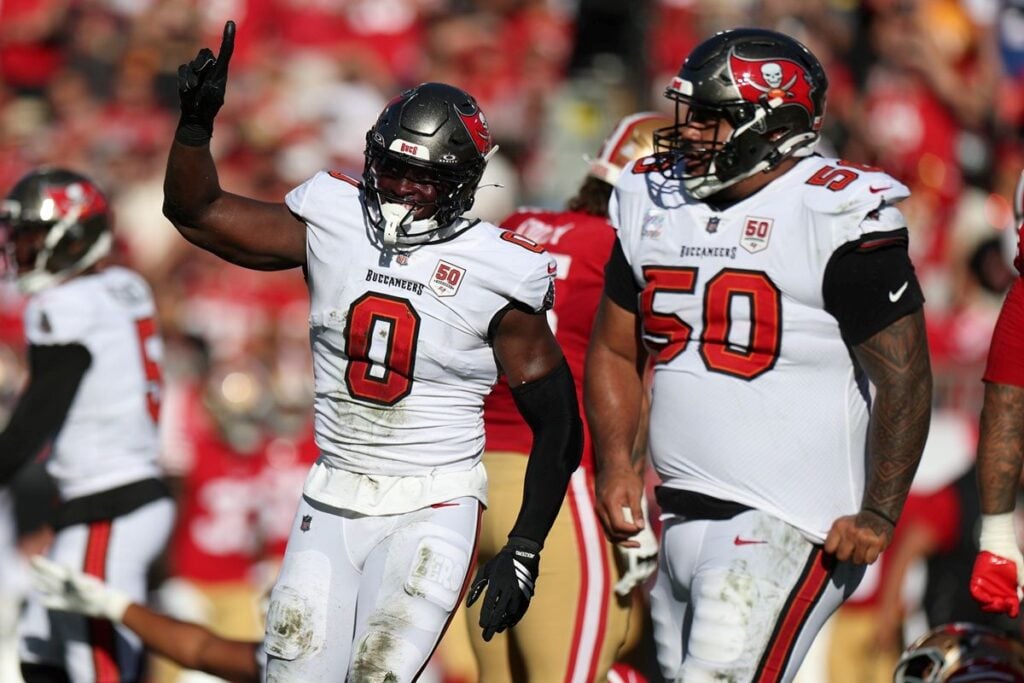
Bucs OLB Yaya Diaby and NT Vita Vea – Photo by: USA Today
It will also require an investment at the two-deep level of the pass rush. Haason Reddick and perhaps even Logan Hall could actually work as depth players in this system, provided there are upgrades over Greg Gaines, Chris Braswell and Anthony Nelson to create a better second wave of pass rush without relying on the blitz. If they can find that player – no small task – then their reliance on linebackers lessens. Linebackers can sit off the line of scrimmage instead of trying to run to depth from mugged up looks.
Again, look at some of these successful defenses. The Rams are succeeding with Nate Landman and Omar Speights manning the middle. The Broncos have been without Dre Greenlaw for half the season, giving snaps to Justin Strnad and Alex Singleton. This should be the number one priority for Jason Licht this offseason. Find a force-multiplier who can elevate the other six players in the box.

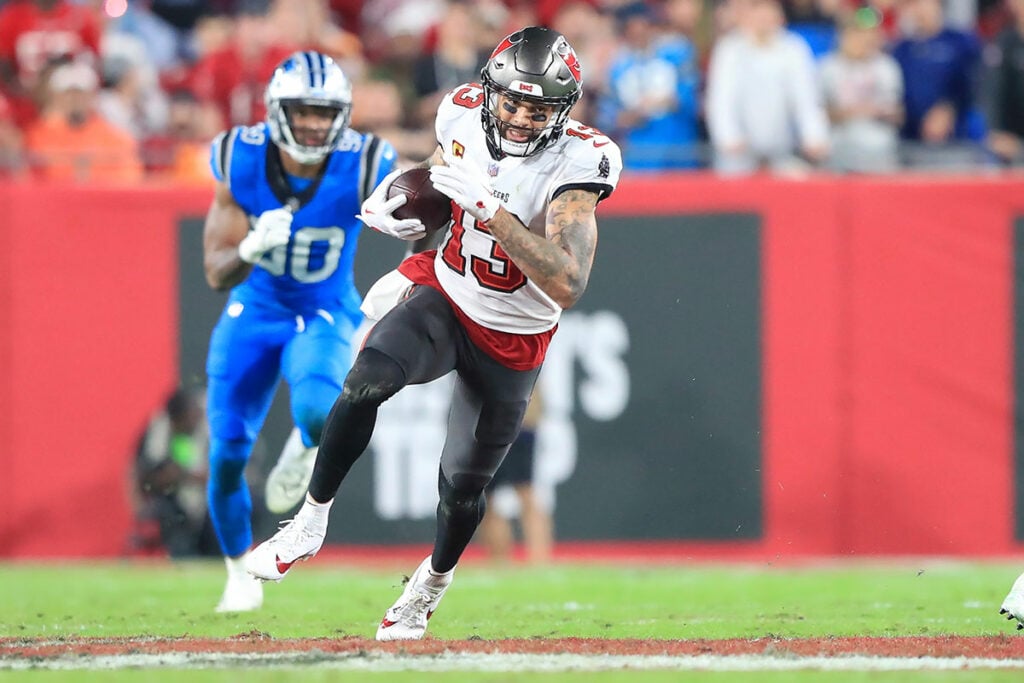 Bucs vs. Panthers: Pewter Preview For Week 18
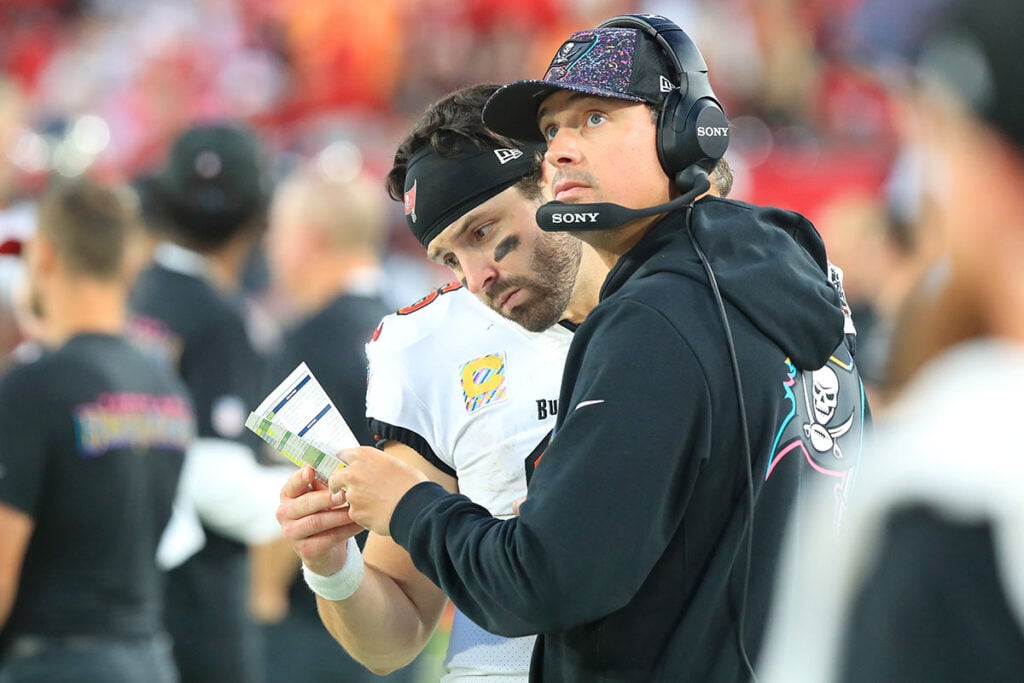 Will Bucs OC Josh Grizzard Stick With The Run Or Free Baker Mayfield?