
The Panini Senior Bowl’s slogan is “The draft starts in Mobile!” Pewter Report spent the past week in Mobile, Alabama, so you guessed it – it is officially draft season!
In a series of scouting reports, I am looking to dive deep on this draft class to identify the strengths, opportunities and fits for the Bucs in the lead up to the 2026 NFL Draft. With outside linebacker a concern for the Bucs this offseason I have made it one of the positions I am focusing on. A quick rundown of evaluations already completed:
Draft: David Bailey
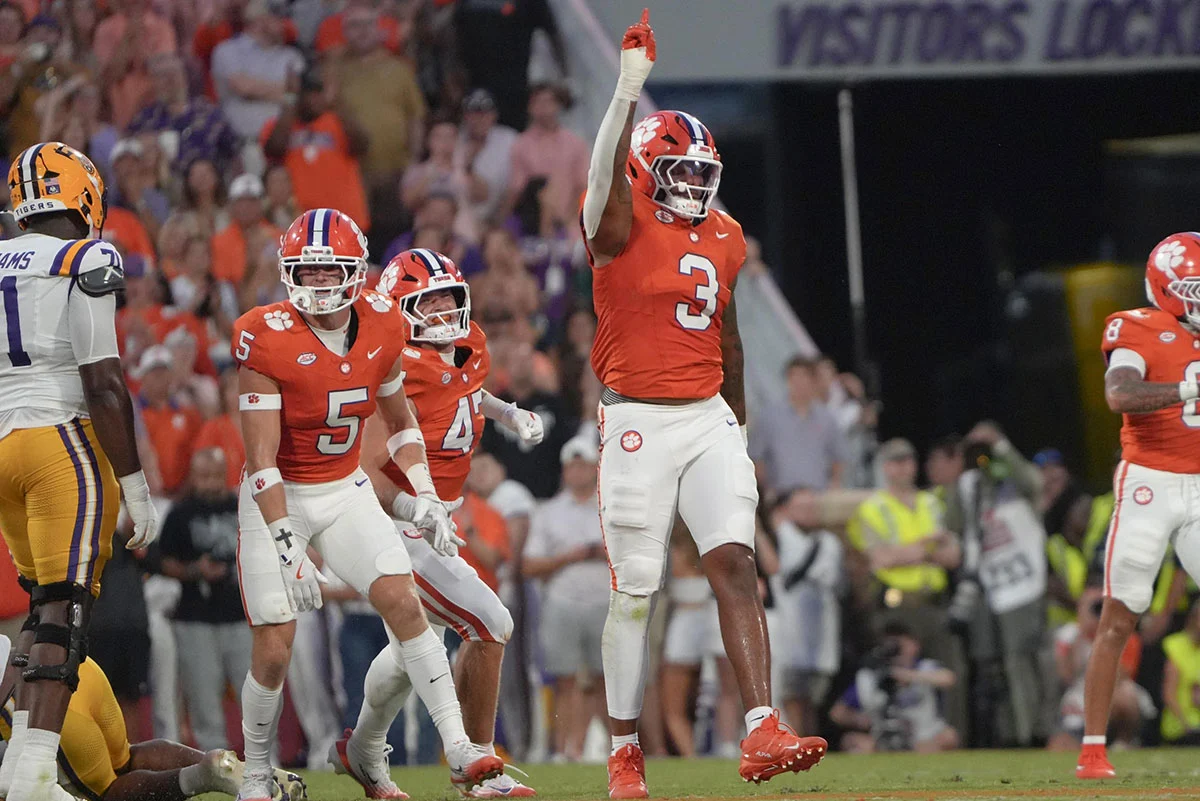
One of the more discussed players at the Senior Bowl was Clemson defensive end T.J. Parker. The pass rusher is getting first-round buzz, so I wanted to see if I could see that type of ceiling for him.
T.J. Parker Background And College Production
A four‑star recruit from Phenix City, Alabama, Parker was widely regarded as one of the top defensive line prospects in the 2023 class. Ranked 43rd nationally and sixth among defensive linemen, he arrived at Clemson with the type of pedigree and physical foundation that typically forecasts early playing time. At 250 pounds coming out of high school, he already possessed the frame and natural strength to compete, and the additional 13 pounds he added in college only enhanced his power profile.
Parker made an immediate impact as a freshman, posting 5.5 sacks and 12.5 tackles for loss — production that placed him firmly on the national radar. His sophomore season was even more impressive: 11.0 sacks, 19.5 TFLs, and six forced fumbles. That year, he looked like a future first‑rounder, combining power, length, and disruptive instincts in a way that few underclassmen can.
But his junior season brought regression. His sack total dropped to five, his TFLs fell to 9.5, and his overall impact was less consistent. Whether due to increased attention, technical stagnation, or schematic usage, the step back complicates his projection.
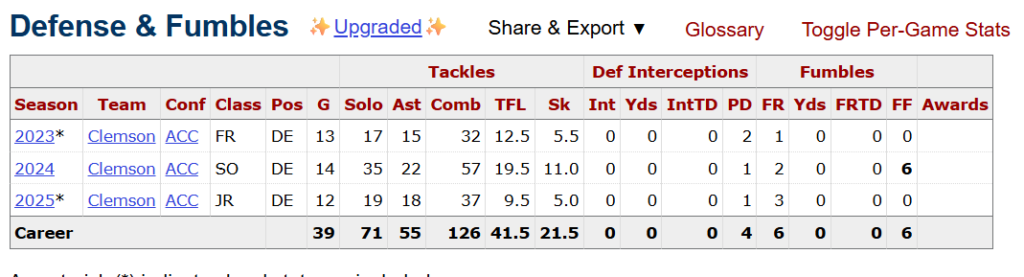
Still, across three seasons, Parker produced at a level that demands NFL attention. His flashes are real, his power is real, and his physical tools remain enticing.
Scouting Report
Games watched: Pitt 2024, South Carolina 2025, Florida State 2025, 2026 Senior Bowl practices
Athleticism
Measurements (per Senior Bowl):
Height: 6-foot-3
Weight: 263
T.J. Parker’s athletic profile is defined by a blend of power, length, and functional explosiveness rather than elite twitch or bend. His burst off the line is strong when he’s in a true pass situation — when Parker can pin his ears back and fire off the ball without hesitation. In those moments, he shows the type of first‑step quickness that stresses tackles and forces them into recovery mode. But that burst is inconsistent. When Parker is reading run‑pass keys or reacting to movement, his get‑off slows, and he loses the advantage his natural explosiveness should give him.
Parker’s bend and flexibility are above average but not consistently deployed. There are reps where he flattens the arc, dips under contact, and threatens the corner with real efficiency. But those reps are the exception, not the rule.
Too often, he gets run up the arc, losing leverage and allowing quarterbacks to step up cleanly. His ability to corner is tied closely to his play speed — when he plays fast and aggressive, the bend shows up. When he hesitates or gears down, the stiffness becomes more apparent.
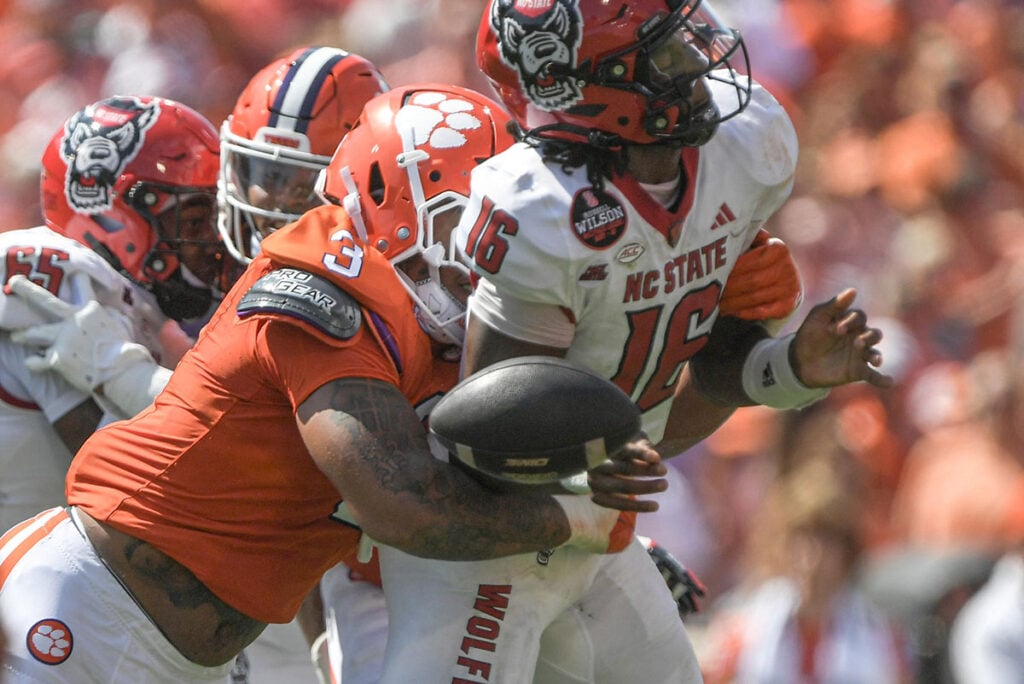
Clemson edge rusher T.J. Parker – Photo by: IMAGN Images – Ken Ruinard
Change‑of‑direction ability is another area where he shows limitations. Parker struggles to redirect off quarterback keepers on option plays, and sudden lateral movements from running backs can leave him off balance. His hips don’t unlock easily, and he can be late to transition from upfield rush to lateral pursuit. In space, he’s functional but not fluid.
Overall, Parker’s athleticism is good enough to play in the NFL and win with power, but not dynamic enough to consistently win with pure athletic traits.
Pass Rush
Parker’s pass‑rush profile is built around his long‑arm, his lower‑body power, and his ability to condense the pocket. His long‑arm is legitimately excellent — one of the best in the class. He uses it to create displacement, lock out tackles, and generate leverage advantages. The move stems from his strong base and powerful hips, allowing him to drive tackles backward even when they anchor well.
TJ Parker’s long-arm has been destroying people left and right today https://t.co/ggBW5lytLS
— NFL Draft Files (@NFL_DF) January 27, 2026
His hand placement on his stab move is consistently impressive. He targets the inside shoulder, creating space to work the outside corner. When he times it correctly, he can create immediate separation and force tackles into recovery mode. His rip move is less consistent — effective at times, but too often lacking the torque or timing needed to clear himself cleanly.
Parker flashes a ghost step, but it’s rarely used and not yet a reliable part of his arsenal. His move diversity overall is limited. The Clemson star doesn’t consistently set up inside counters, despite having the power profile to threaten them. This is one of the biggest developmental opportunities in his game. If he learns to threaten inside more often, his outside rush will become more dangerous, and it will let him access wins on a more regular basis.
One of the underrated strengths of his game is his rush intelligence. He plays with good eye discipline, recognizing screen setups and adjusting his path to eliminate throwing lanes. Parker manipulates blockers based on quarterback movement, bending his rush to close escape windows. These are traits that translate well to the next level.
Some of his best reps come when he moves inside on passing downs. Guards struggle with Parker’s length and power, and he can collapse the pocket quickly from interior alignments.
At this stage, Parker projects more as a pocket constrictor than a high‑volume sack artist. His power will translate immediately, but his lack of consistent bend and sequencing limits his ceiling as a pure edge‑winner.
Run Defense
Parker’s run defense is one of the more puzzling parts of his evaluation. Given his size, length, and power, he should be a dominant edge setter. And at times, he is. Against gap schemes, he uses his long‑arm effectively to set the edge, maintain leverage, and hold the point of attack. His strength allows him to anchor and prevent displacement.
But against wide zone, his limitations become more pronounced. He struggles to stay attached to the outside hip of blockers, often losing leverage and allowing runners to press the edge. His hip stiffness shows up here — he doesn’t bend well enough to maintain outside leverage when blockers stretch him horizontally.
His block deconstruction is inconsistent. While his long‑arm is strong, his hands independently are not. When tackles latch onto him, he struggles to shed cleanly. His pursuit effort is outstanding — he will chase plays 30–40 yards downfield — but his pursuit speed is average. He’s not going to run down NFL backs from behind on wide‑flow plays.
Didn’t have TJ Parker running 30 yards downfield to recover a fumble on my bingo card. pic.twitter.com/a8XtJerSoy
— Josh Queipo (@JoshQueipo_NFL) January 31, 2026
There is room for growth here, but he will need technical refinement and improved leverage discipline to become a reliable early‑down defender.
Coverage
Parker has limited but notable experience in coverage. He understands assignments and is willing to execute them, but his athletic limitations cap his effectiveness. He’s functional in space, but stiff, and his closing burst is average. He’s not a liability, but he’s not a player you want dropping frequently.
Best Traits
- Power profile and long arm
- Ability to rush from the interior on long and late downs
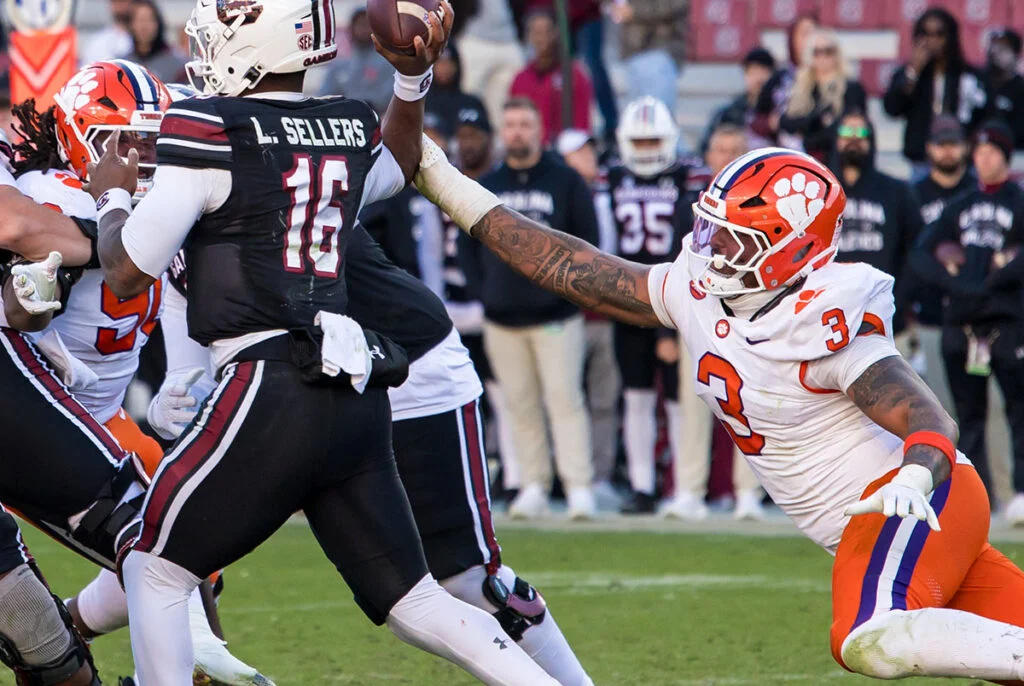
Clemson edge rusher T.J. Parker – Photo by: IMAGN Images – Jeff Blake
Best Role And How He Fits The Bucs System
Given the hype around T.J. Parker, it would seem an NFL team will start him right away, but I believe his best role early would be as a rotational 3-4 outside linebacker who also subs in as a nickel or dime interior rusher. This would give his position coach an opportunity to work with him on the finer points of defending wide zone and build him into a starter by his second or third year in the league. This would help maximize his best traits early and build confidence as he develops.
I have a tier-four grade on him, which means I think he will be a multi-year starter. Based on previous research I have done it would place him somewhere between picks 65 and 85 on a full 255-player draft class for me.
Hear T.J. Parker Speak
Part of NFL Draft evaluations are about more than the tape. Teams want to understand the person as much as the player. How do they think? How do they interpret the game? Who are they as someone who must integrate into a locker room?
We can’t see nearly as much of this as teams do in their in-person interviews, but this year I want to help all of us hear more from the players that we evaluate. With that said, here is a media availability he did just before the 2025 season.
While Parker’s answers were fairly surface level, his confidence and charisma ring through quite clearly. Those traits don’t guarantee a great player, but they are rarely detrimental.

Josh Queipo joined the Pewter Report team in 2022, specializing in salary cap analysis and film study. In addition to his official role with the website and podcast, he has an unofficial role as the Pewter Report team’s beaming light of positivity and jokes. A staunch proponent of the forward pass, he is a father to two amazing children and loves sushi, brisket, steak and bacon, though the order changes depending on the day. He graduated from the University of South Florida in 2008 with a degree in finance.
 Legendary Bucs Coach Bruce Arians Set For Open-Heart Surgery
 PR Roundtable: The First Thing Bucs OC Zac Robinson Must Do Is...